餅 (Mochi)
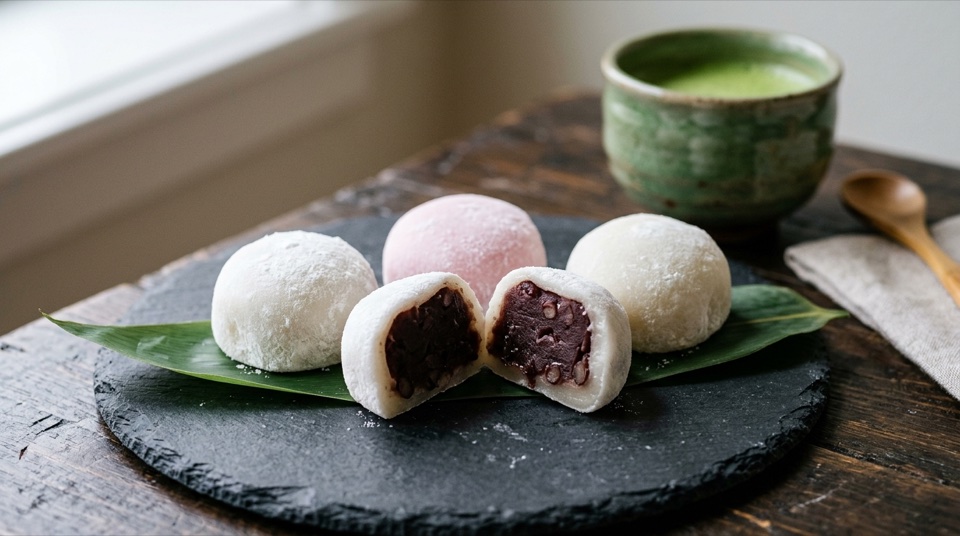
Made by steaming and pounding glutinous rice (mochigome), mochi is essential to traditional Japanese ceremonies, especially New Year celebrations, and is said to have been eaten since ancient times with the spread of rice farming. Soft mochi filled with sweet red bean paste (anko) is known as daifuku mochi and traditionally served with green tea.
Historical details about the origin of this dessert may vary across sources.
Ingredients
0 / 6 ingredients readyAllergens
Contains no common known allergens
Nutrition & Dietary Profile
Estimated per serving (~76 g)Instructions
0 / 8 steps completed- 1Pre-Portioning Anko Filling Divide chilled 5.6 oz red bean paste into 8 equal 0.7 oz (20 g) balls using lightly dampened hands. Arrange on parchment-lined plate and chill in refrigerator 20 minutes while preparing dough so centers stay firm.
- 2Whisking Lump-Free Rice Batter In a heatproof glass or ceramic bowl, combine glutinous rice flour, 0.25 cup sugar, and pinch of salt. Gradually whisk in 0.85 cup water in 3 additions until completely smooth like thin cream (if using coarse shiratamako pellets, whisk and soak 5 minutes to dissolve).
- 3Steaming (or Microwave Alternative) For steaming, wrap pot lid in a clean towel to catch condensation drips and steam bowl over briskly boiling water 12–15 minutes until opaque white batter turns glossy and uniformly translucent. (Microwave option: cover loosely with vented plastic wrap, heat 1 minute on high, fold with wet spatula; heat 1 minute, fold; finish with 30–40 seconds until translucent).
- 4Pounding & Stretching While Piping Hot Dip a sturdy wooden spoon or silicone spatula in cold water and vigorously fold and pound the hot cooked mass in the bowl 30–40 strokes over 1–2 minutes until satiny, stretchy, and unified.
- 5Transferring onto Starched Board Dust a broad cutting board or tray heavily through a sieve with potato starch or cornstarch. Turn hot dough onto the starch bed, dust lightly on top, and cool 2–3 minutes until comfortable to touch (~115°F / 45°C) while still warm and pliable.
- 6Dividing & Shaping 8 Discs Coat bench scraper and palms in starch; pat dough into an even rectangle and cut into 8 equal squares. Roll edges slightly under and press each in starched hands into a 3.5-inch (8–9 cm) round, keeping center slightly thicker than edges so seams stay thin.
- 7Enclosing the Filling Tightly Brush excess dry starch off the inner center face of each dough disc with a soft dry brush so seams seal cleanly. Set a chilled anko ball in center, gather edges upward like a drawstring pouch, and pinch firmly shut.
- 8Brushing Excess Starch & Same-Day Serving Place seam-side down, gently cup palms to shape smooth domes, and brush away heavy white powder with a dry pastry brush. Place in paper liners and enjoy fresh at room temperature with green tea (never refrigerate uncovered, as rice starch hardens quickly).
Chef's Masterclass Guide: Gear, Cues & Storage
Required Equipment & Pan Size
- Steamer (lid wrapped in cloth) or microwave-safe glass bowl
- Wet wooden spoon or sturdy silicone spatula + fine starch sieve & dry pastry brush
Doneness & Texture Checkpoints
- Cooked rice batter loses all chalky white opacity and turns uniformly glossy and translucent.
- Pounded dough stretches smoothly in a satiny ribbon.
Pro Tips & Troubleshooting
- Wrapping steamer lid in a towel stops water drops from making dough slimy.
- Dust off dry starch from the inner disc face before pinching seams so edges bond cleanly.
- Shape while still slightly warm; fully cooled mochi resists sealing.
Serving & Storage Guide
- Best enjoyed same day at room temperature alongside hot green tea.
- Wrap individually in plastic wrap at room temperature up to 24 hours (do not refrigerate uncovered).
More World Desserts to Explore
Ichigo Daifuku (いちご大福)
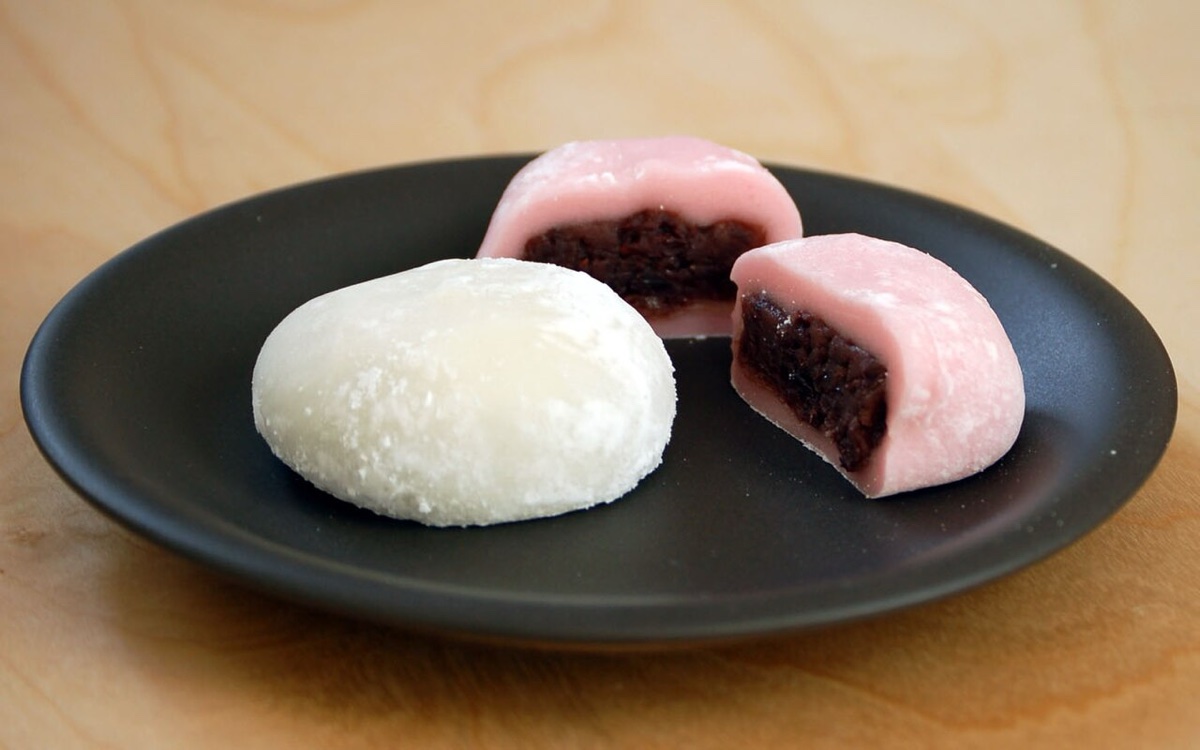
Popularized in Tokyo wagashi shops during the 1980s as a joyful spring confection, Ichigo Daifuku hides a juicy whole fresh strawberry inside silky sweet red or white bean paste wrapped in pillowy steamed sweet rice mochi (gyūhi).
Konpeitō (金平糖)
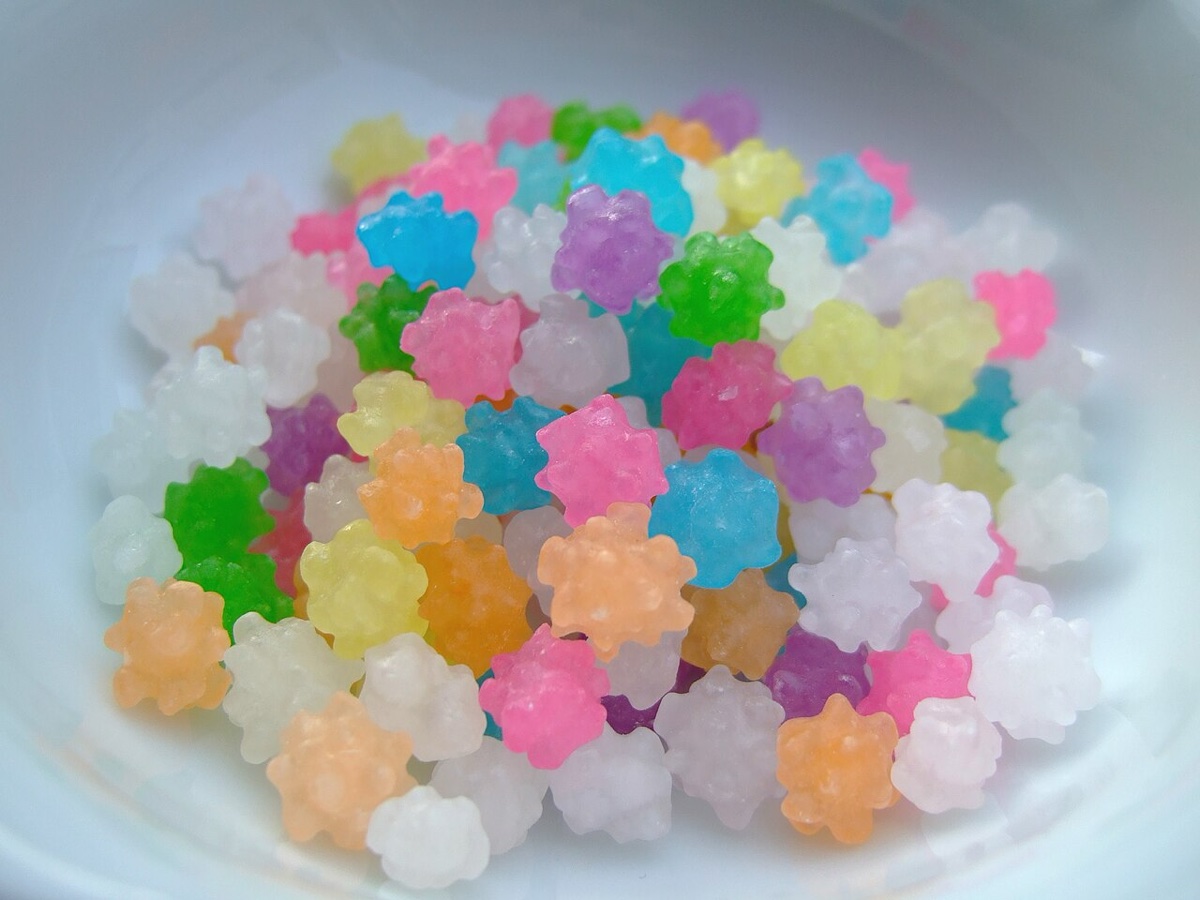
Born from 16th-century Portuguese “confeito” sugar plums brought to Nagasaki, jewel-toned Japanese Konpeitō star candies form delicate crystalline spikes (tsuno) as supersaturated sugar syrup drizzles layer by layer over tumbling sugar seeds inside a warm rotating pan.
Kuzumochi (葛餅)
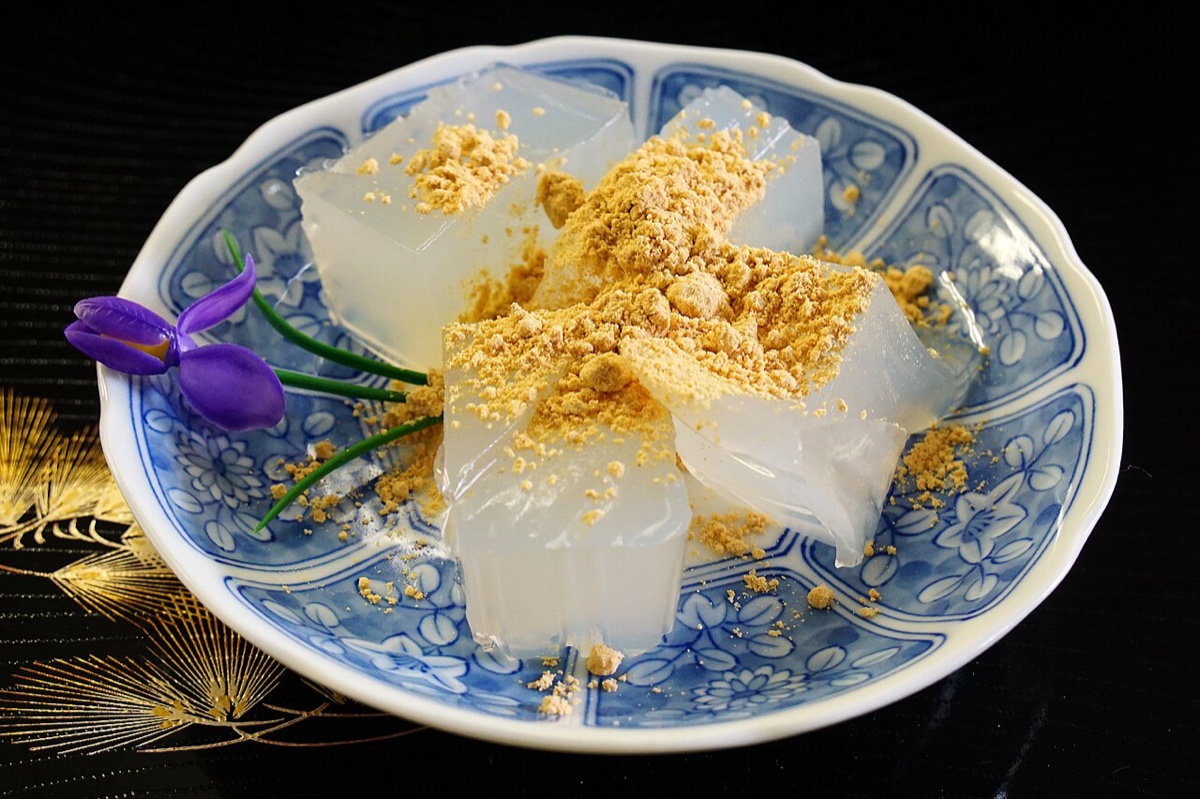
Crafted in the Kyoto and Yoshino wagashi tradition from pure mountain arrowroot kudzu starch (distinct from eastern Tokyo’s fermented wheat variety), chilled translucent Kuzumochi delivers a silky, bouncy wobble finished with toasted soybean flour (kinako) and dark kuromitsu syrup.